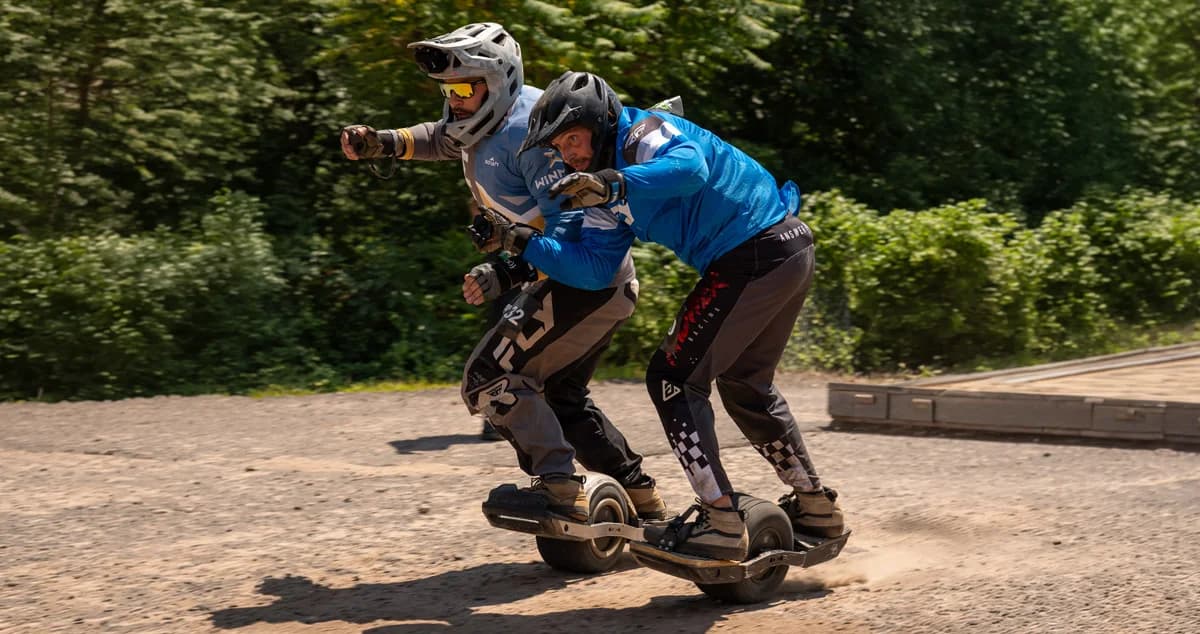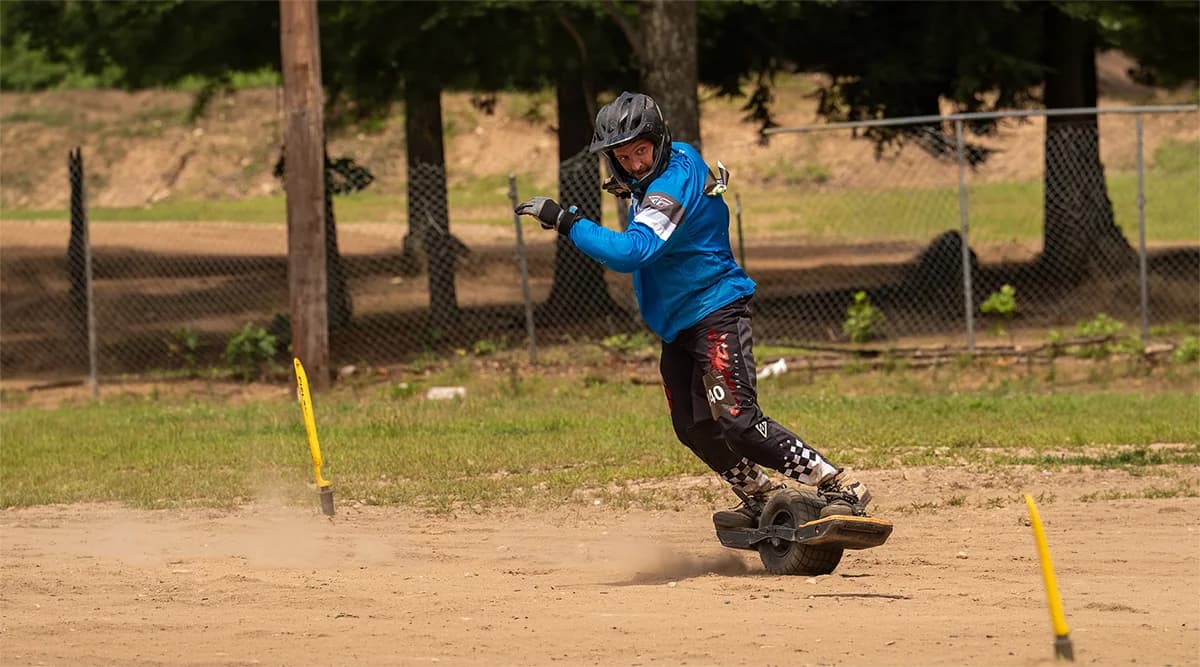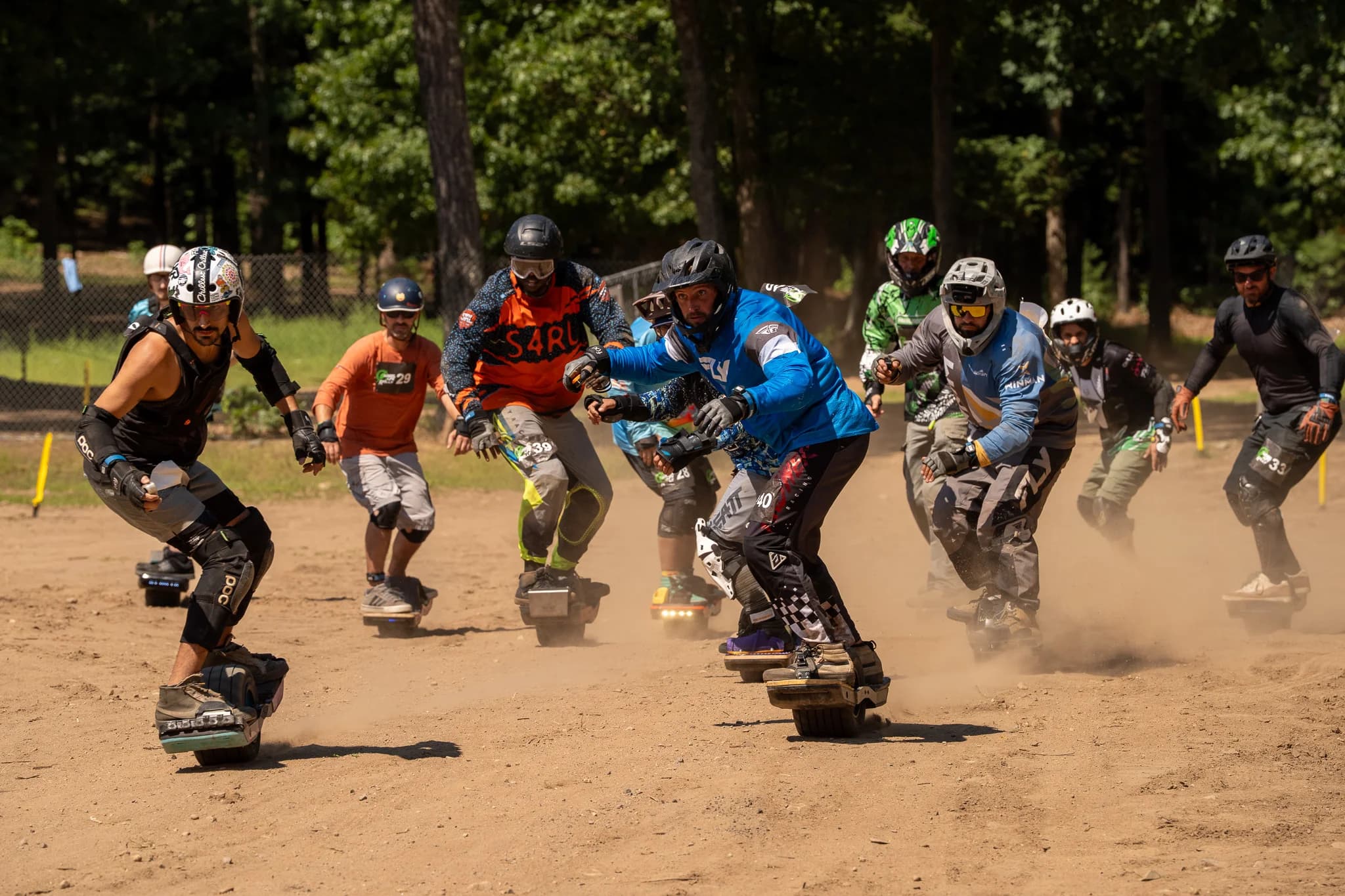
Jack Minsker races in a full face helmet, two chest protectors, wrist guards, knee pads, padded shorts and motocross pants. He is 21, finished second in Mens Pro at Northwest Electric Fest on USA FLT timing, and in the last couple of seasons of racing he has walked away with bruises and the odd scratch.
That is not caution. It is the arithmetic of a sport whose top speeds have climbed faster than its habits have.
What follows is what riders on the USA FLT circuit do, reported from interviews. It is not instruction, and none of it is tuned to your board, your terrain or your experience. Change one thing at a time, test it somewhere a fall is cheap, and wear the gear.
What Does Jack Minsker Actually Wear to Race?
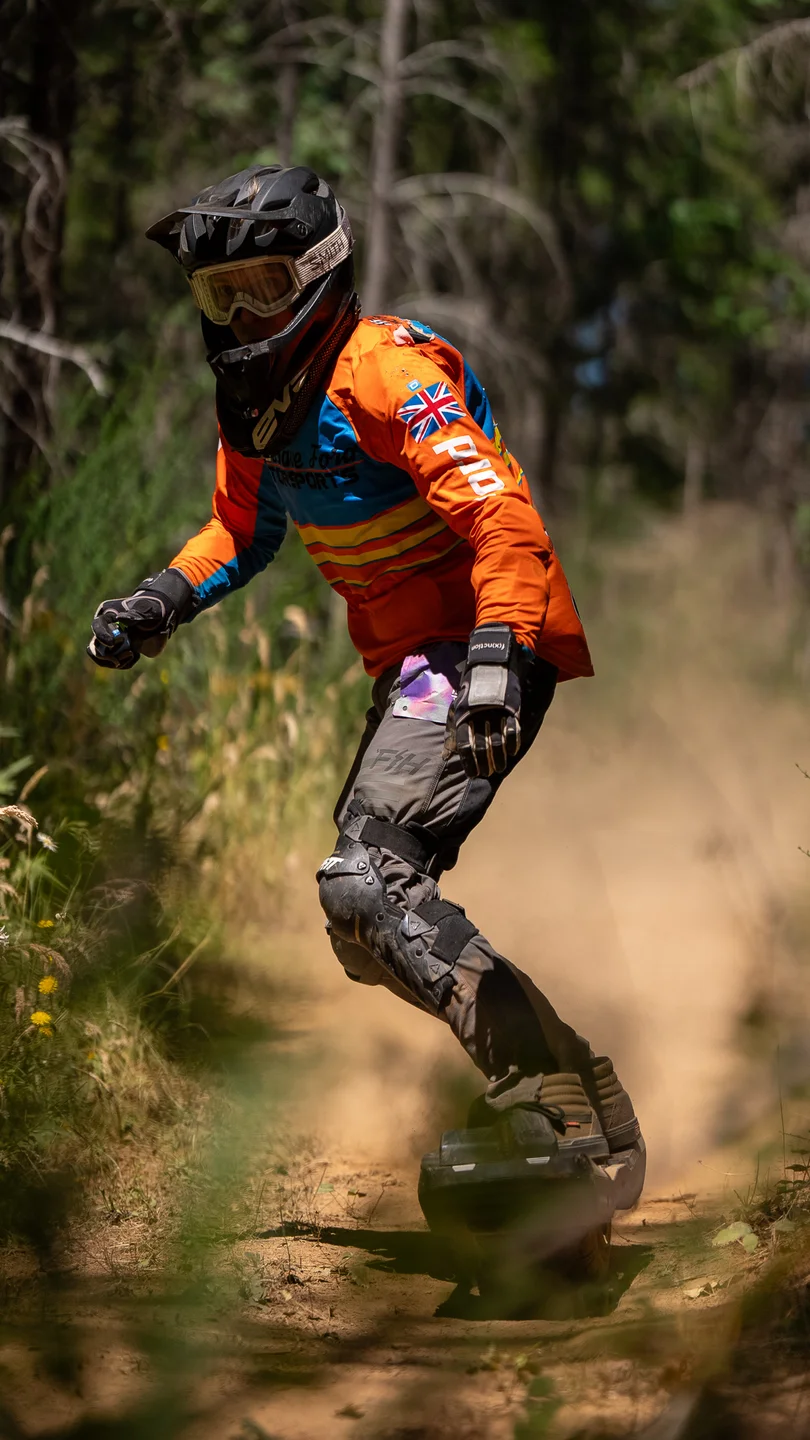
Everything, and he itemizes it without embarrassment. The list is worth reading in full because most riders assemble theirs one purchase at a time and stop early:
So I wear a lightweight padded chest protector and then I wear a heavier chest protector. I wear a full face helmet. I wear, you know, wrist guards, knee pads. I wear padded shorts. I wear motocross pants. So I wear pretty much everything that will keep me from getting beaten up by hitting the ground. The most I have really walked away with in the past couple of years while racing has been a couple bruises and maybe a scratch or two.
Two chest protectors is the detail people query. A light padded layer and a hard shell do different jobs, and he wears both because a trail crash at race pace is an impact and a slide at the same time.
Why Did the Gear Standard Change?
Because the boards did. Minsker has been racing since 2022 and can date the shift precisely:
staying competitive has meant going 35 or 40, which from when, you know, XR and GTS were racing your maximum, maybe 25 or 30 in that range.
Ten to fifteen miles an hour is not a small increase when it is the speed you hit the ground at. Kinetic energy climbs with the square of speed, so a 40 mph get-off is not a third worse than a 30 mph one, it is roughly twice the energy. The field adjusted:
You've seen people go from, you know, a helmet, wrist guards, to now wearing basically full body armor so that they can fall at 40.
He also names the cost of that escalation, which is not just money. Riders looking at a class where staying competitive means 40 mph on a trail straightaway decide it is not for them, and Minsker thinks that is one of the real barriers keeping casual riders out of racing.
What Did Racers Wear Before?
Much less, and Minsker is candid that he was one of them:
Because my first couple races I wore like a basic helmet and like wrist guards and knee pads. I didn't even have elbow pads on. I mean, I was pushing 25 on an XR. Like I was pushing the limits of that board and I got lucky and I didn't hurt myself.
Read that as the whole argument in miniature. He was not being reckless by the standard of the time. He was wearing what everyone wore, on a board that was slower than what he races now, and his own summary of how it worked out is that he got lucky.
Does More Gear Slow You Down?
Minsker's answer is that the trade is real and it is not close. He passes along a line he says he has heard put this way:
The way I've heard it put is dress for the slide, not the ride.
And the version of it that actually decides the purchase:
it's better to be slightly uncomfortable while riding than to be very uncomfortable while hitting the ground.
His advice to a casual rider thinking about entering is the shortest sentence in his interview:
If you plan on going fast, wear more gear.
Can Gear Replace Judgement?
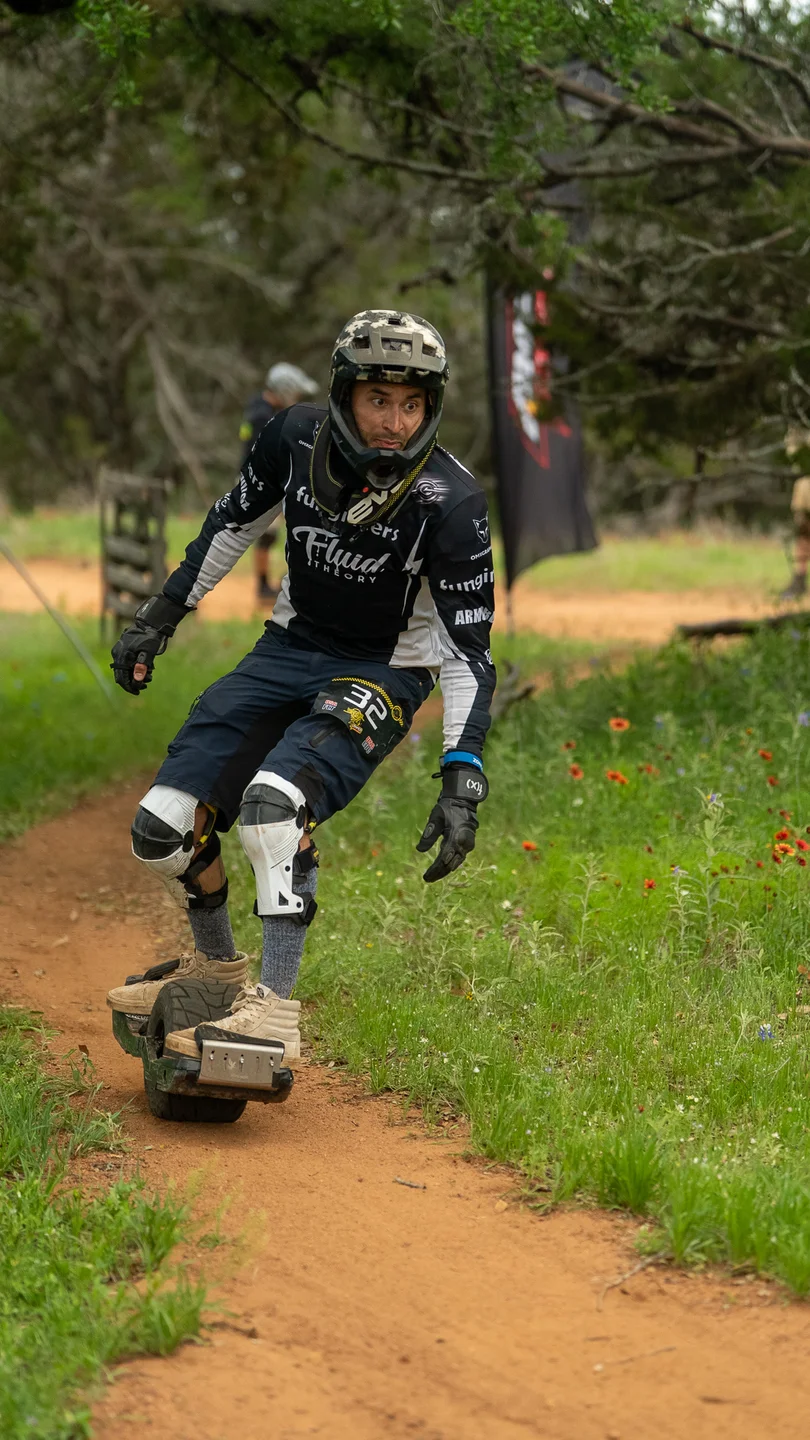
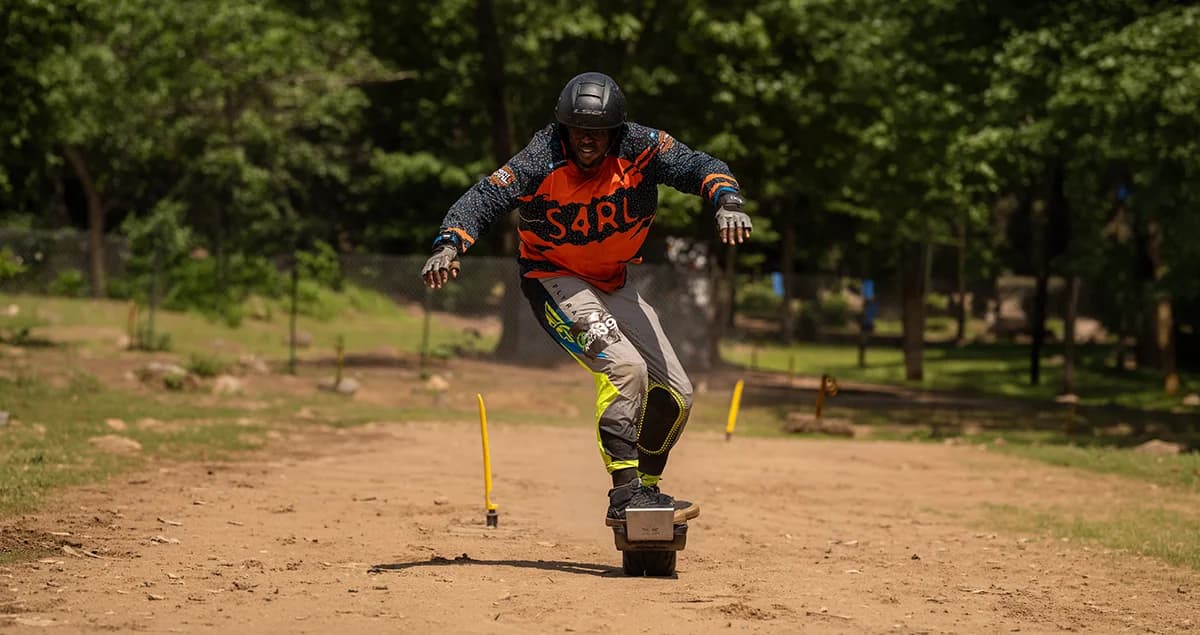
No, and Branden LaCour is the rider who has thought hardest about the other half. He won Mens Pro at Lemonade Float Fest, comes from an endurance running background, and treats risk as something to be managed rather than absorbed:
Cause I'm 38 now. So I can't take massive slams and get right back up. I need to be really smart about my line choices and how I race so that I can push it to my limit and know I'm relatively safe doing so.
His method is line scouting rather than bravado. He walks and rides sections separately to decide in advance where he can commit, and he is comfortable deciding that a feature is not worth it. At Let It Ride he watched riders clearing a stair set and did the maths on himself out loud:
That's what's made me almost stop is like getting really hurt. But then you get over that fear and you're like, there's ways to prevent getting hurt. And that's one big thing I learned is like calculated risks, knowing when something's worth clearing and when something's not worth clearing and like how to take a certain line in a fast but safe fashion versus other things.
Body armor changes what a mistake costs. It does not change how often you make one, and LaCour's point is that the second number is the one a rider actually controls.
What Does This Mean for Your First Race?
Work backwards from the speed you will actually reach rather than the speed you ride at home. A trail straightaway at a sanctioned event is not a bike path, the rider in front of you will put you in a dust cloud, and the ground at the end of it does not care which class you entered.
The practical floor from these three: a full face helmet, chest protection front and back, wrist guards, knee pads, padded shorts and long pants that will not shred. Check your event's published requirements before you travel, since minimums are set per event and an item you left at home can be the difference between racing and watching. Then go and scout your lines, because the gear is the second half of the answer and LaCour's half comes first.