Ahni Romine won Womens Pro at Northwest Electric Fest and still has to ask for sponsors. Laura Dobbs found the sport at a bar and built a whole community around it. Sarah Meeker set a goal and hit it. The field is small, and that is the opportunity.
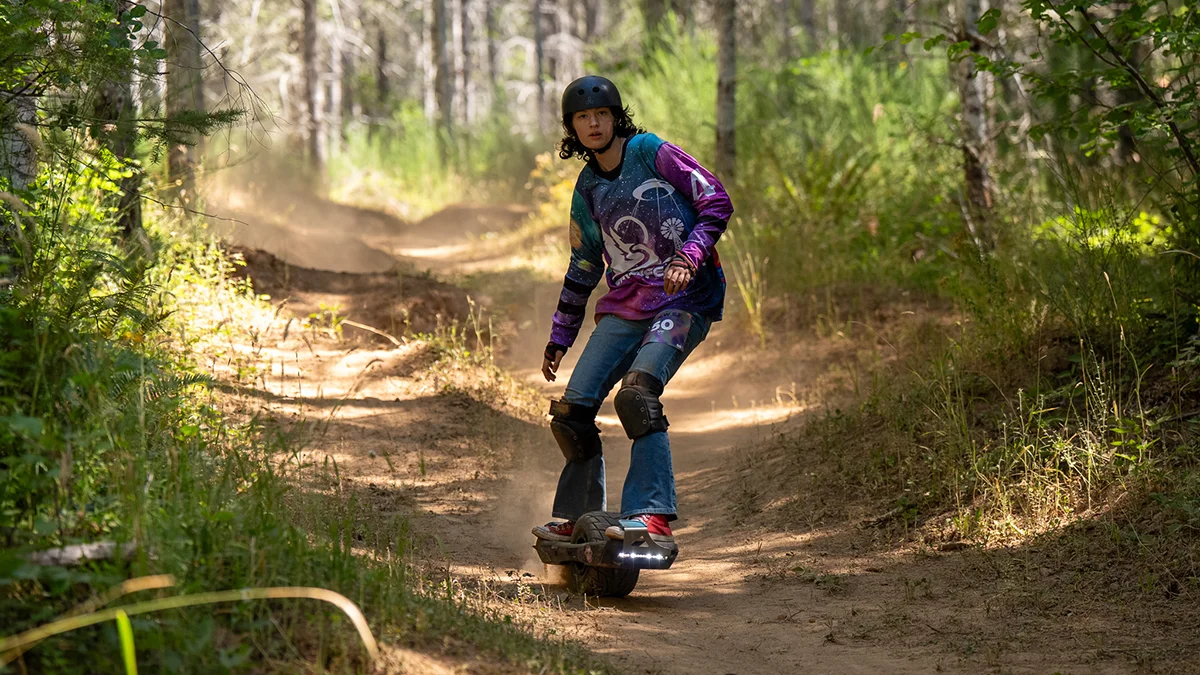
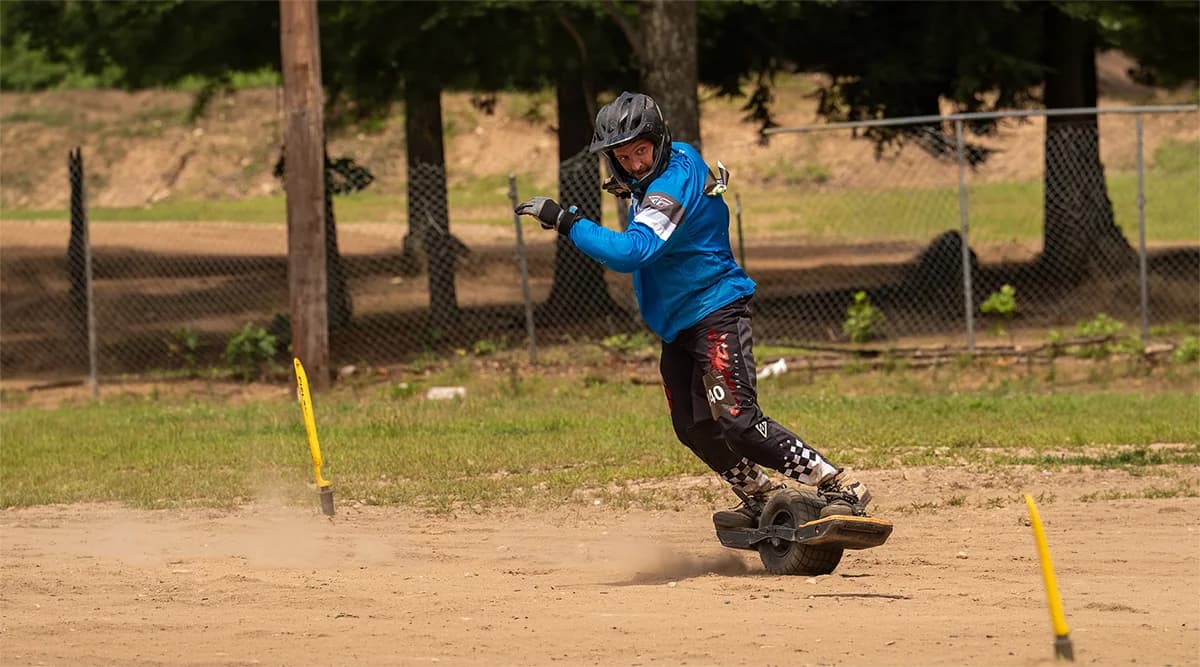
Ahni Romine putting in her qualification time at NW Electric Fest, where she went on to win Womens Pro Onewheel calls. Photo credit Seth Johnson (USA FLT).
At Northwest Electric Fest in July, Ahni Romine won Womens Pro in 9:59.700, the only rider in the class under ten minutes. She has been riding since she was 11 or 12, has been racing since 2022, and made that event her single race of the year because she was graduating and heading to college. The Womens field on the USA FLT circuit is small enough that its riders can name each other, and good enough that a first-timer will meet a national class winner in the paddock. This is what it actually looks like from inside it.
Who Is Winning Womens Pro Right Now?
Romine, on the clock. At Northwest Electric Fest the timed order in Womens Pro was Romine at 9:59.700, Taylor Kelly at 10:35.900 and Heather Graehl at 12:32.400, while the podium awarded on the day put Graehl second and Kelly third, because the event decides its trophies on the heats and USA FLT scores the chip-timed run. Both results are correct answers to different questions.
For Romine, getting to one event was the whole plan:
This is kind of my big race for the year.
She has raced ShredFest three times and normally makes that her season. Her boards come from a single small shop, Sharky Shred Shop, and she says on tape that she is open to talking to sponsors, which is not something a national class winner should have to say.
How Did These Riders Start Racing?
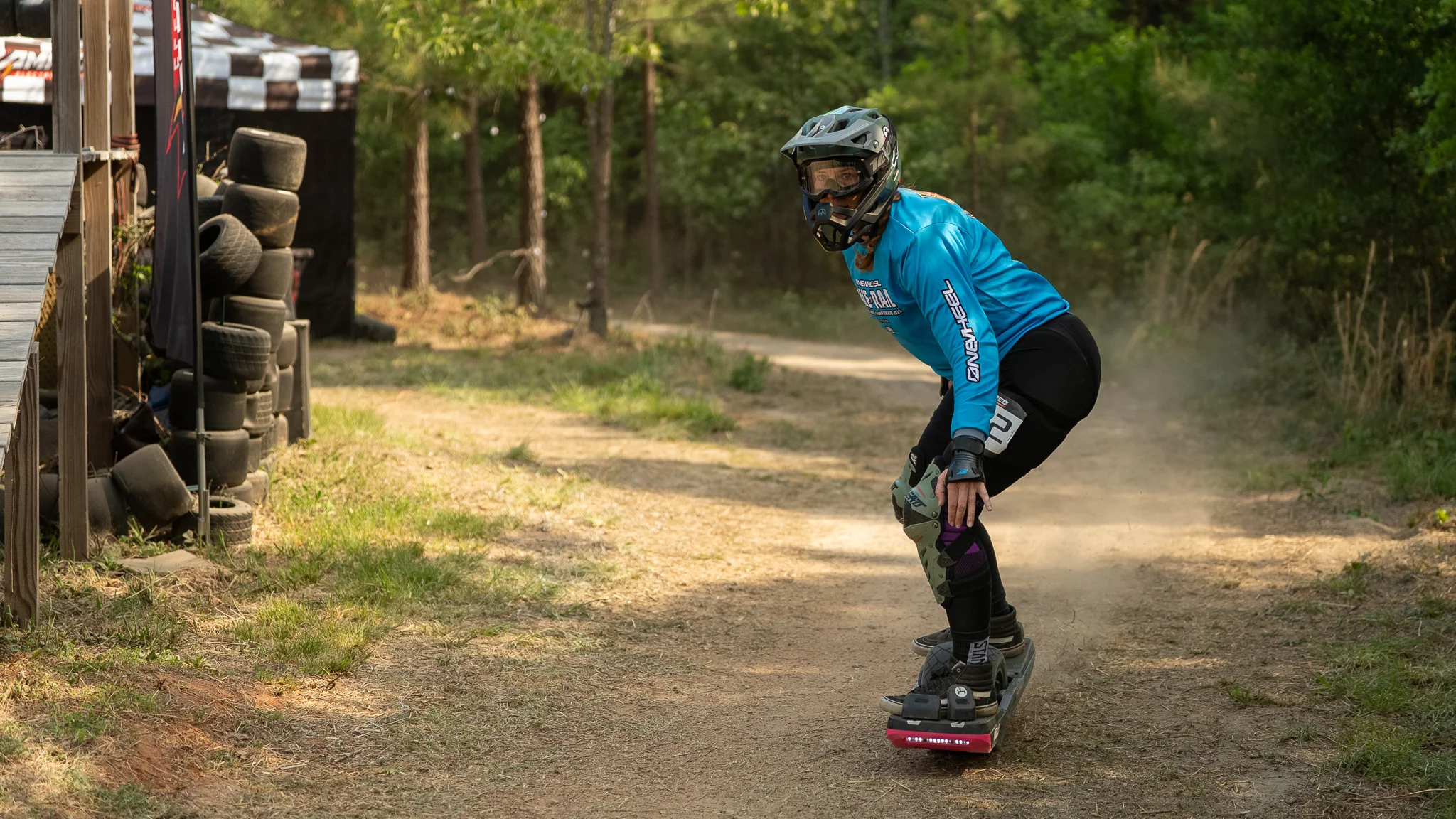
Mostly by being talked into it, or talking themselves into it. Laura Dobbs found the sport by accident, watching a stranger ride one at a bar in Virginia Beach:
I saw somebody on a one wheel at a bar one time, and I was like, "That's awesome. Let me get on that." I threw off my shoes and rode it around the parking lot, and I bought one a week later.
The seller was letting his board go because he had just broken his wrist. That was six years ago. She found her local 757 riding crew soon after, and entered her first race three years later at Oak City Shred Fest, after watching women compete there and deciding to try it herself.
Romine's route in was family. She started on an island in Alaska, where her father pushed the whole household into riding as a way to get outdoors that was not another walk on the same trail. Sarah Meeker started in Baltimore in 2020 and now races trails almost exclusively:
I genuinely really like technical trails.
What Are They Racing On?
Different terrain asks for a different rider. Dobbs rides hard-packed dirt and sand back home, and has learned the hard way what soft sand does to a landing:
Hard-packed sand. I've gotten flung off on the soft sand. That's not fun. It's harder than you think it would be when you don't have pads on. But I like the trails that I ride in Virginia are like hard-packed dirt slash sand with some roots. I like some roots.
Her favorite trail system so far was Race for the Rail in Tahoe two years ago, which she still calls the most beautiful course she has ridden. Reading a course before you race it, on this circuit, is as much a skill as riding the board.
What Does a Womens Race Weekend Actually Look Like?
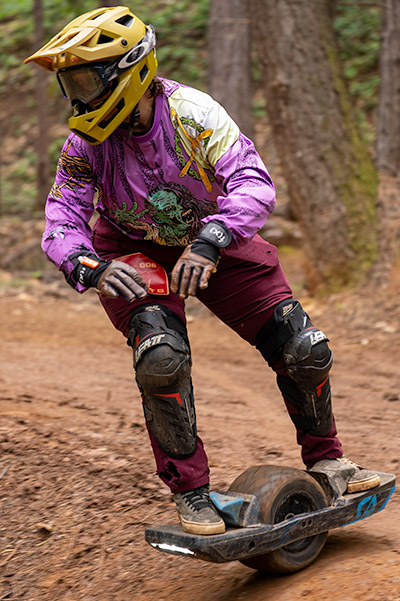
Sarah Meeker racing at Seek n' Shred Shred Fest 2026. Photo credit Seth Johnson (USA FLT).
Like chasing a specific person - Ashley Gnann. Meeker, racing at Lemonade Float Fest, went in with a target that had nothing to do with the podium: close the gap on the rider who has always been slightly ahead of her.
My goal this weekend was to be under a minute, and I was 35 seconds behind her [Gnann], and I did beat her on one segment. We got to spend the entire weekend together training. We did 45 miles together practicing on Friday, and it just was an amazing time.
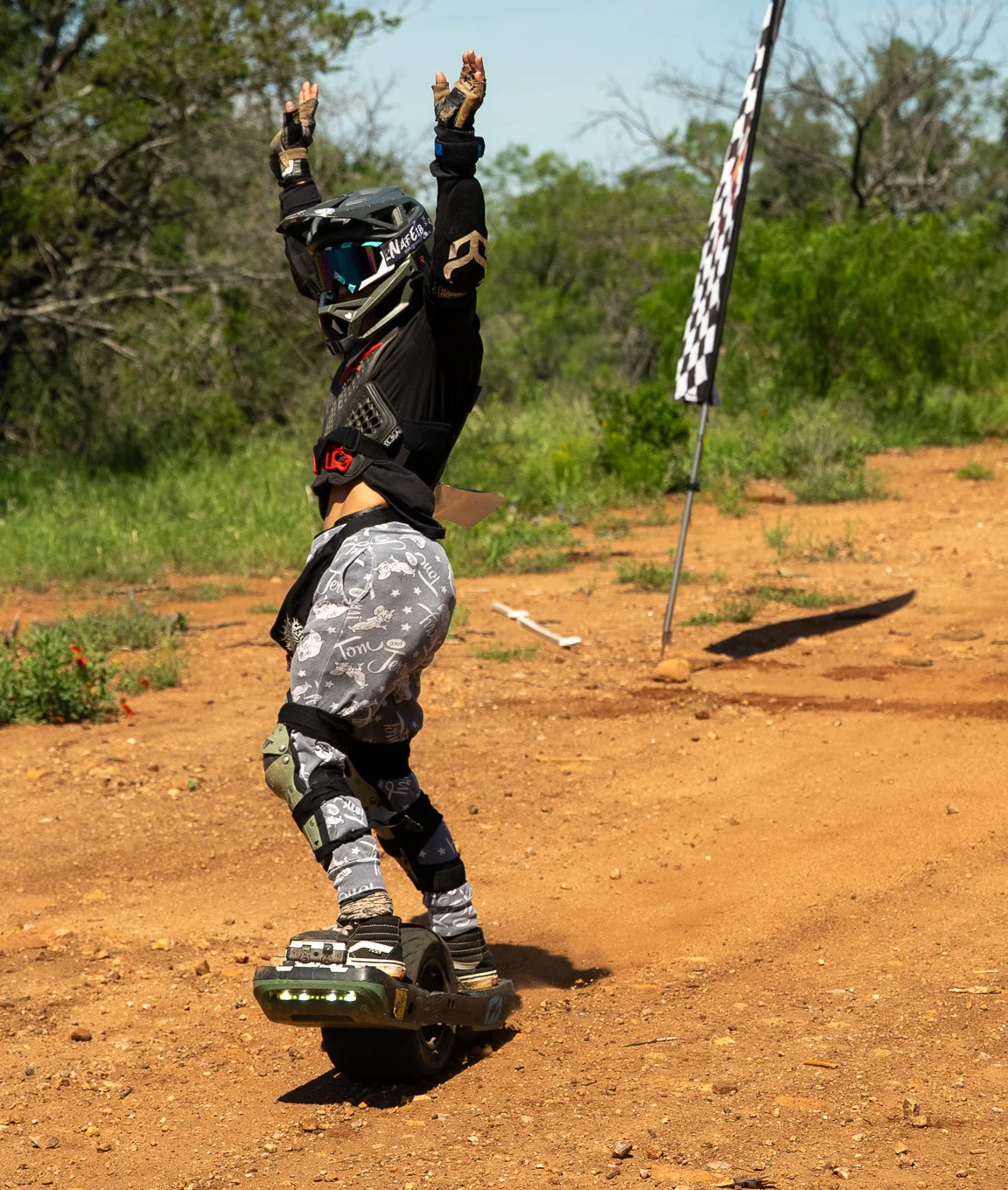
Ashley Gnann crossing the finish line at Lemonade Float Fest's Endurance race. Photo credit Seth Johnson (USA FLT).
Forty-five miles of practice together on the Friday, with the rider she was trying to beat. That is a competitive field and a training partnership at the same time, which is what a small class looks like when it is working. By her own account she finished second and hit every goal she set:
This weekend I made sure to set goals. I accomplished all of my goals.
What Happens When Something Goes Wrong Mid-Race?
The field fixes it, which in a segment format can be the difference between a result and a scratch. Meeker ran short of battery partway through the timed segments and had to solve it alone, in the middle of a race, while the group she was riding with went on:
My battery was very low by segment five, and I had to make the decision to leave the group I was with and go back and figure out how to charge by myself.
Another rider produced a charger that belonged to a third rider, and she finished. Worth extracting for anyone racing a multi-segment event: battery planning is a race variable, and the draw across five or seven segments is not the draw across a single timed run.
Is the Field Big Enough Yet?
No, and the riders say so first. Womens Pro at Northwest Electric Fest was three riders on the clock. Laura Dobbs sees the same smallness from a different angle, as a reason the class holds together rather than a weakness:
Any woman that rides, we're friends, basically.
Romine describes the same thing from the inside, as the reason the class is friendly rather than guarded:
All women racers are super cool. Always really nice.
What Would They Tell a Woman Thinking About Her First Race?
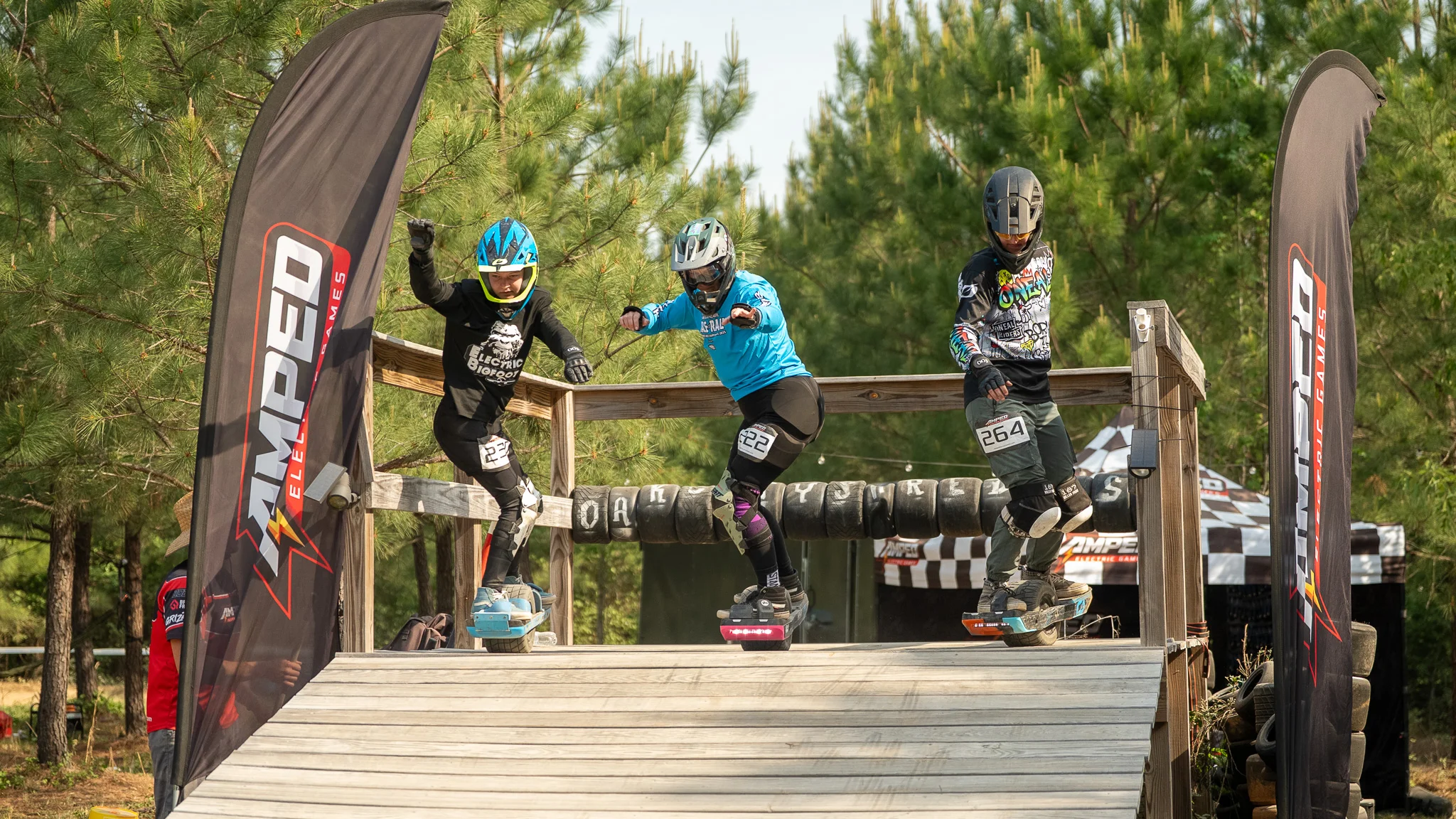
From left Leah Kellam, Laura Dobbs, Emma Taylor racing Womens Pro Onewheel at Oak City Shredfest 2026. Photo credit Seth Johnson (USA FLT).
Keep it simple. Dobbs narrows her advice to two things:
My advice really is to wear your gear and ride with people who are faster than you because that's how you get better and challenge yourself.
Gear on, and ride above your level on purpose. And the thing Meeker names as what actually holds the group together, which is not results:
It has nothing to do with our rank, what category we race, how fast we hit the trail. We're part of this community and it's never going to end.
Three riders, three routes in, one of them a national class winner who still has to ask for sponsors. The field is small. That is the opportunity, not the obstacle.