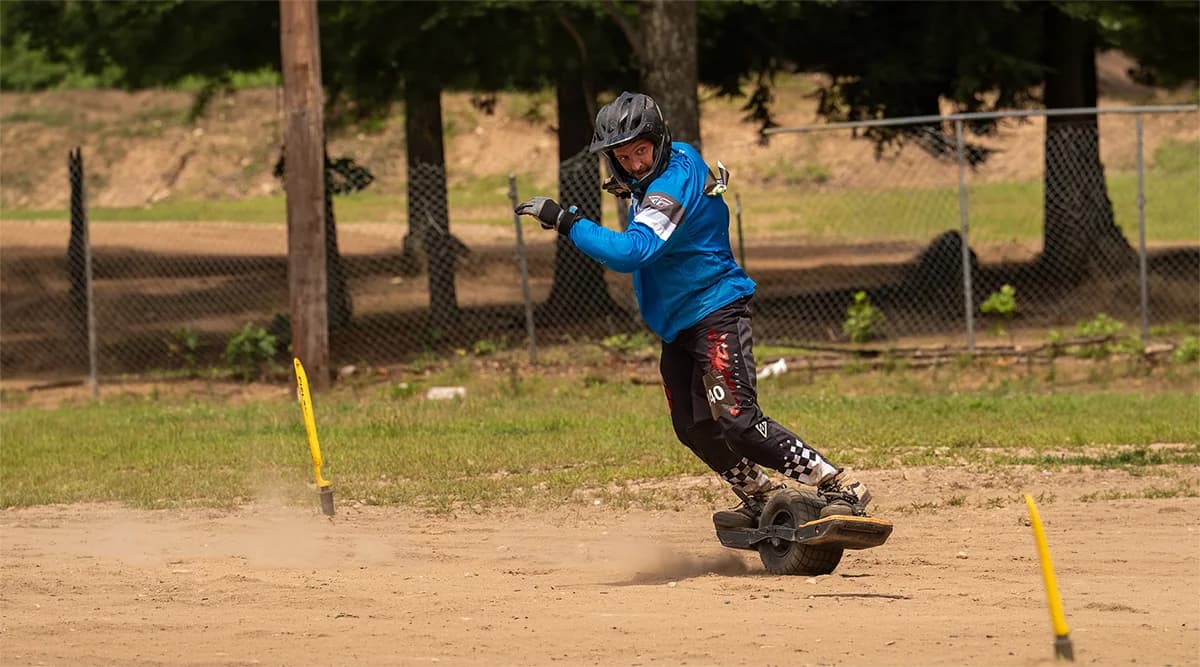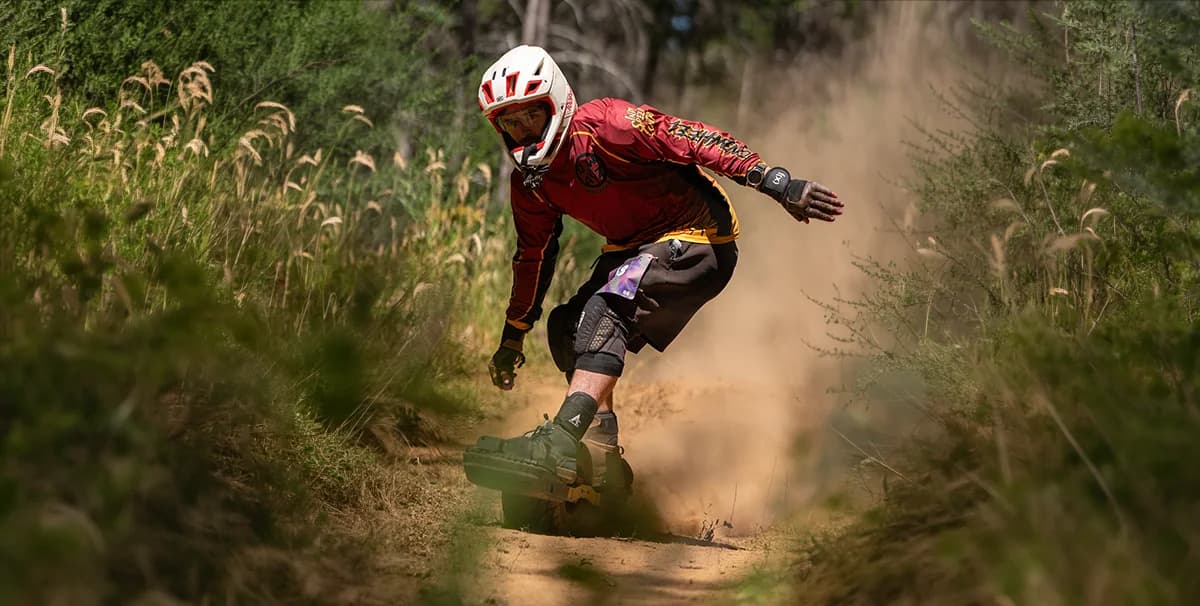
Cameron Patecell just took the win in the Mens Pro Onewheel division at Northwest Electric Fest, his second straight title at the event and the latest result in a season that has him on the box at every sanctioned stop he has entered. It is a win on a course he openly calls the hardest race in the country, which makes it the one he wanted most.
He stopped the clock at 8:47.130, thirty four seconds clear of the field. Ask him when he knew he had it and he will tell you he never did. NW Electric Fest doesn't work that way.
That course is so long. You've never won. You can fall and go off anywhere. The whole time I was just thinking, I have to not fall, but go fast enough that they don't catch back up.
The 27-year-old from Southern California came off once during the weekend, on the Eco Tone section, in the soft ruts just before the bridge. He got back on. He held the lead. He describes the internal audio of that moment as unprintable.
The Course That Never Lets You Win
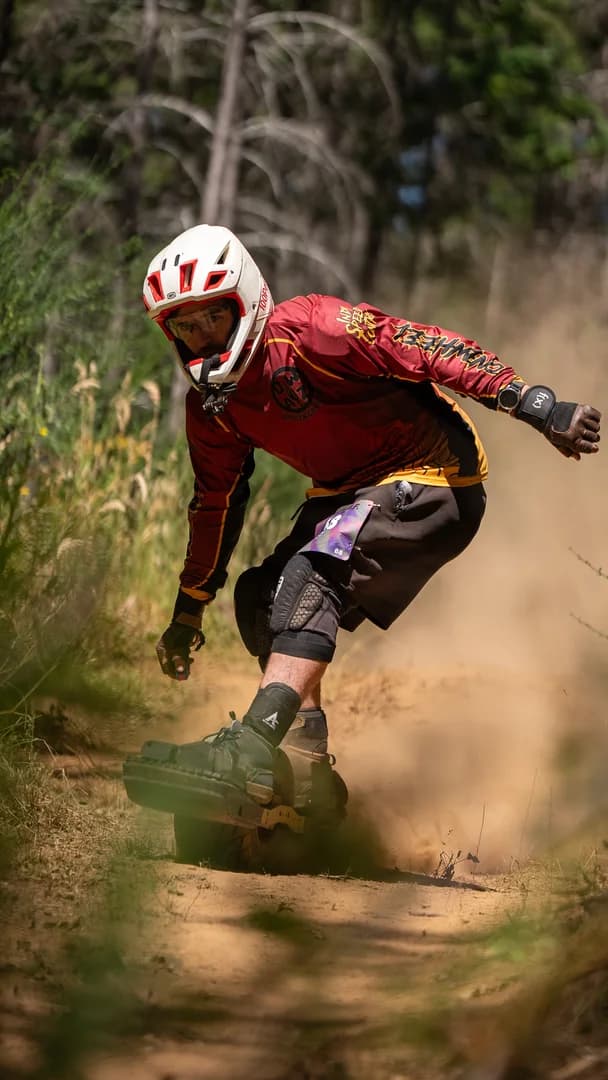
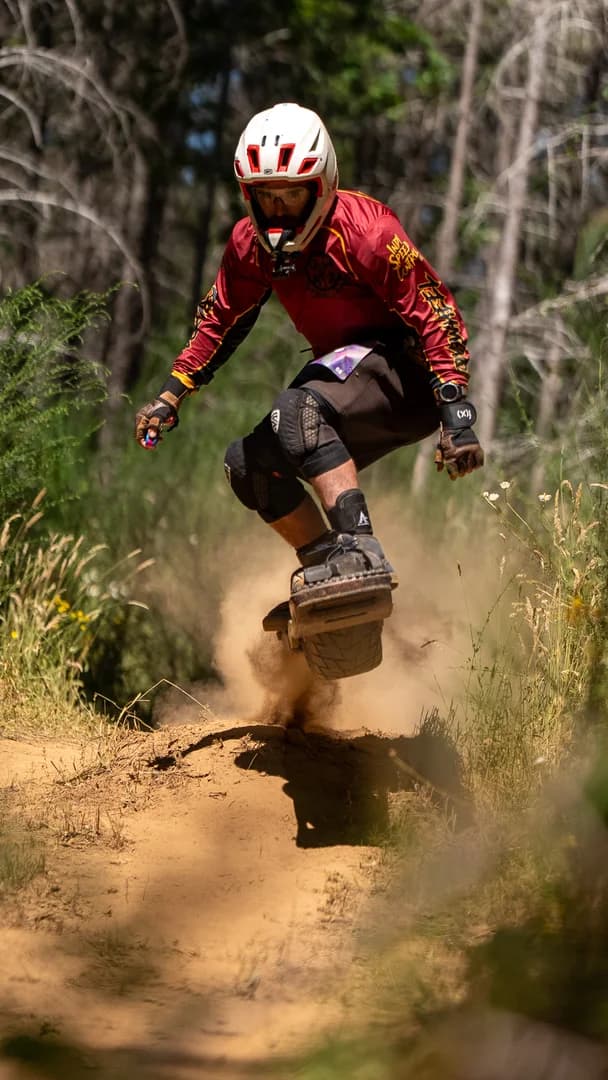
NW Electric Fest runs some of the longest heats on the circuit. The winning run this year took the better part of nine minutes, over dusty, heavily shadowed, badly broken trail that drops the entire way down. Patecell says no camera has ever managed to communicate how steep it actually is.
On a Onewheel, that gradient is not a gift. Braking means leaning back on a loose descent, which can mean dragging the tail. Get it wrong and you are sliding down the mountain rather than riding down it. That combination of length, surface and pitch is why he rates it above everything else he races.
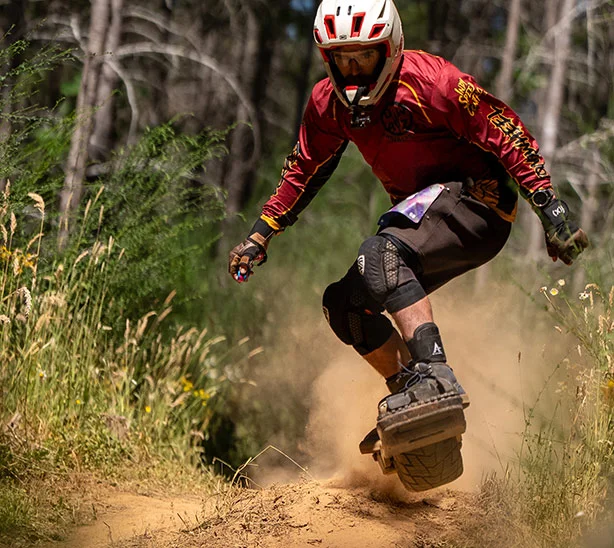
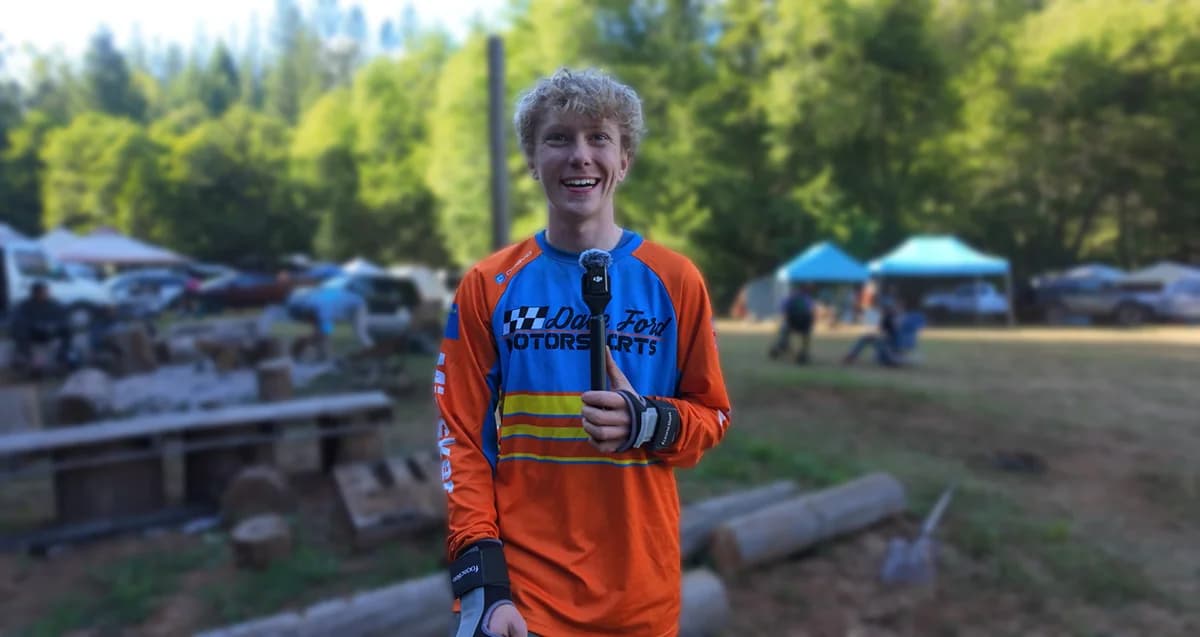
The rider he was measuring himself against all weekend was Jack Minsker, who Patecell describes flatly as scary, because he can always close a gap. Minsker finished second, thirty four seconds back, which tells you the gap never actually closed and that Patecell spent nine minutes assuming it would. Seek n' Shred earlier in the season came with its own chase: in the mass start, a junior expert rider sat directly on his wheel until he finally caught something loose and went down. Patecell was pushing hard enough that his honest reaction was relief.
From a Blown Up Board to Back to Back Titles
His first competitive event was Amped Electric Games in 2024. His board failed on arrival, so he raced the weekend on a friend's equipment, on a setup he had never ridden, still free foot, having switched from a Onewheel XR to a VESC build about a month earlier.
The sport nearly lost him before any of that. His brother bought a Pint in 2022. Patecell, with no helmet and no gear, spent day one doing top speed runs down a neighborhood hill, hit 19 mph, and went to the pavement hard enough that he did not ride again for eight months. What brought him back was the opposite of speed: his brother picked up a GT and took him out on a trail.
It was being able to do a trail so quickly and effortlessly, while having fun navigating on the Onewheel. That was what sold it for me.
He credits two riders with turning him from a rider into a racer. Branden LaCour and Kyle Klausing who came out to Southern California early on, and watching them was what pushed him to go all in on footholds, high voltage and a remote. What stuck was not a setup tip. It was watching LaCour live out of a teardrop trailer for a month and a half, riding every weekend, putting down something like five full charges a day.
Okay, so you don't just become fast randomly. You really have to put in the work.
Before the Board
Patecell arrived at Onewheel racing with a deeper athletic base than the sport's reputation suggests. Soccer was his main sport from childhood through high school. He played baseball, ran track and did sprinting and jumping events, and rode scooters, skateboards, bikes and Ripstiks outside of organized sport.
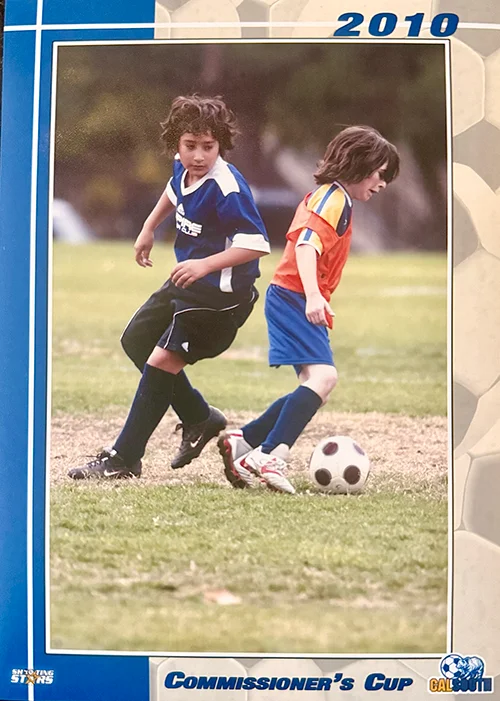
Patecell has always been athletic and competitive in sports, especially soccer.
He snowboarded about once a year, and that one is worth correcting, because it is the comparison people reach for first and he does not think it holds. After three straight years of Onewheel riding he got back on a snowboard for the first time in a decade.
There are similar feelings, but it's really more just the muscles that you work. The technique is pretty different. I mean, you're on one wheel.
Riding gave him something the gym never did. After high school, by his own account, he was slowly degrading: no more organized sport, no real reason to train. The motivation to get out on a board turned out to be far stronger than the motivation to get on an elliptical, and the fitness followed from that.
134 Volts, 400 Amps, and a Remote
Patecell races a fully custom VESC configuration: a 134 volt pack, a 400 amp controller, a Fungineers 5 inch Superflux high torque motor, and The Float Life 5 inch BTG Pioneer tire. His footholds are a three-piece printed system with a toe hook, a center block and a heel stop. He calls it the most locked in setup short of being strapped in, with the obvious tradeoff that printed parts break. They’re based on vow block design with some customizations and a custom mount from Moff shop called “Poutz”.
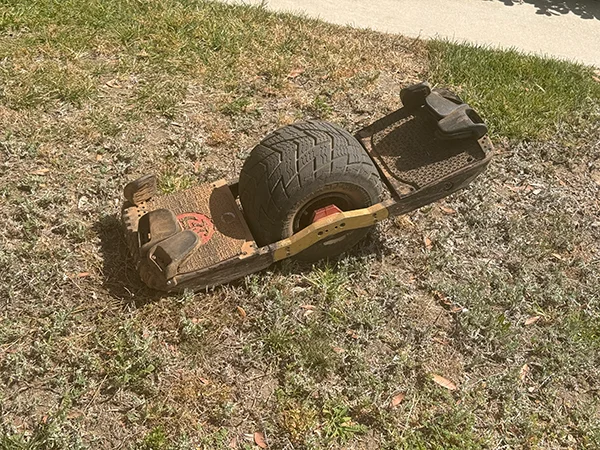
Patecell's fully custom VESC configuration
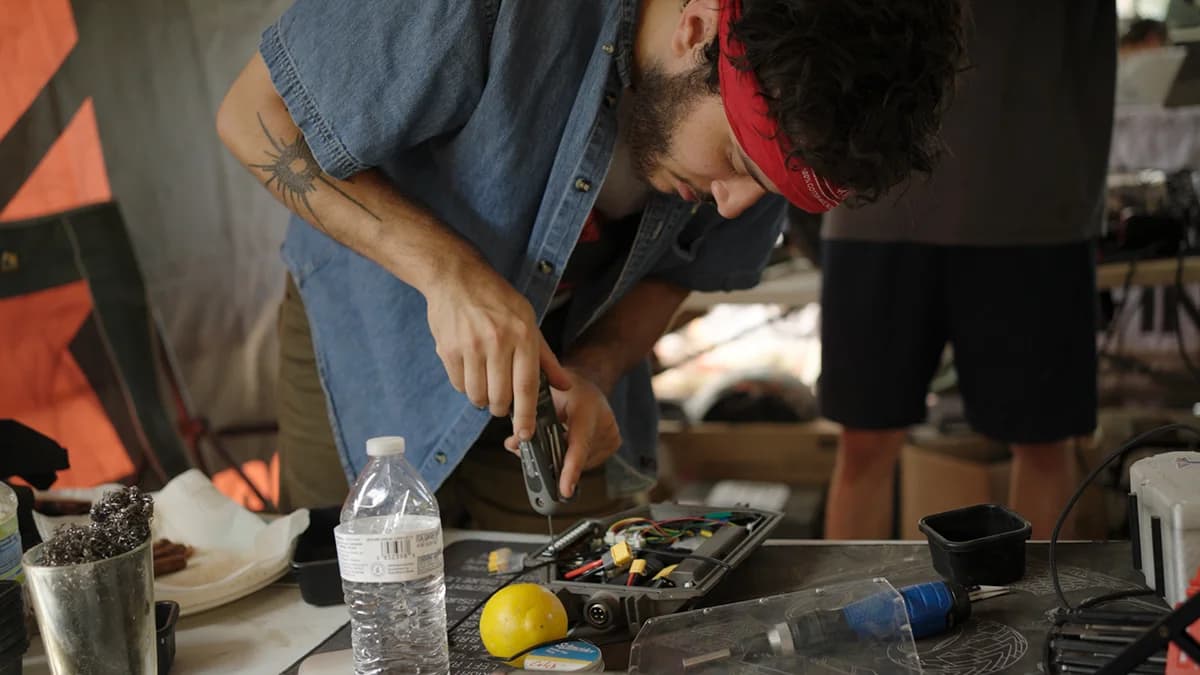
He is deliberate about not changing any of it. His tune has not moved since September of last year. The remote is what makes that possible: rather than building a profile for each venue, he adjusts riding angles by hand in real time as conditions demand. Hardware only changes when the gain is big enough to justify the adaptation period, because even a better part costs you speed while you get used to it.
Asked where the equipment goes next, he gave the least hedged answer of the interview.
Suspension is the future. A thousand percent. That's not even a debate. We needed this last year. We needed this four years ago.
Staying Under Thirty
For someone who wins on the most demanding course on the calendar, Patecell has a notably conservative position on race formats, and it is a safety position rather than a preference for terrain. He prefers enduro-style racing on genuine trail, where the trail itself governs speed, and he is not a fan of smooth fire road racing, where the surface removes the natural ceiling. His stated comfort zone for racing is under 30 mph.
I definitely prefer staying under 30 safety wise, especially racing. The dangers, people are not thinking about them.
Ask him what he is actually working on and the answer is not speed. It is jumps, and he is unusually direct about why.
It's so scary getting hurt on the jumps that I don't do them enough, and then I'm more scared of them because I'm not doing them enough. It's such a catch 22, because that's the most dangerous time on a Onewheel. You have to be so perfect with the takeoff and the landing.
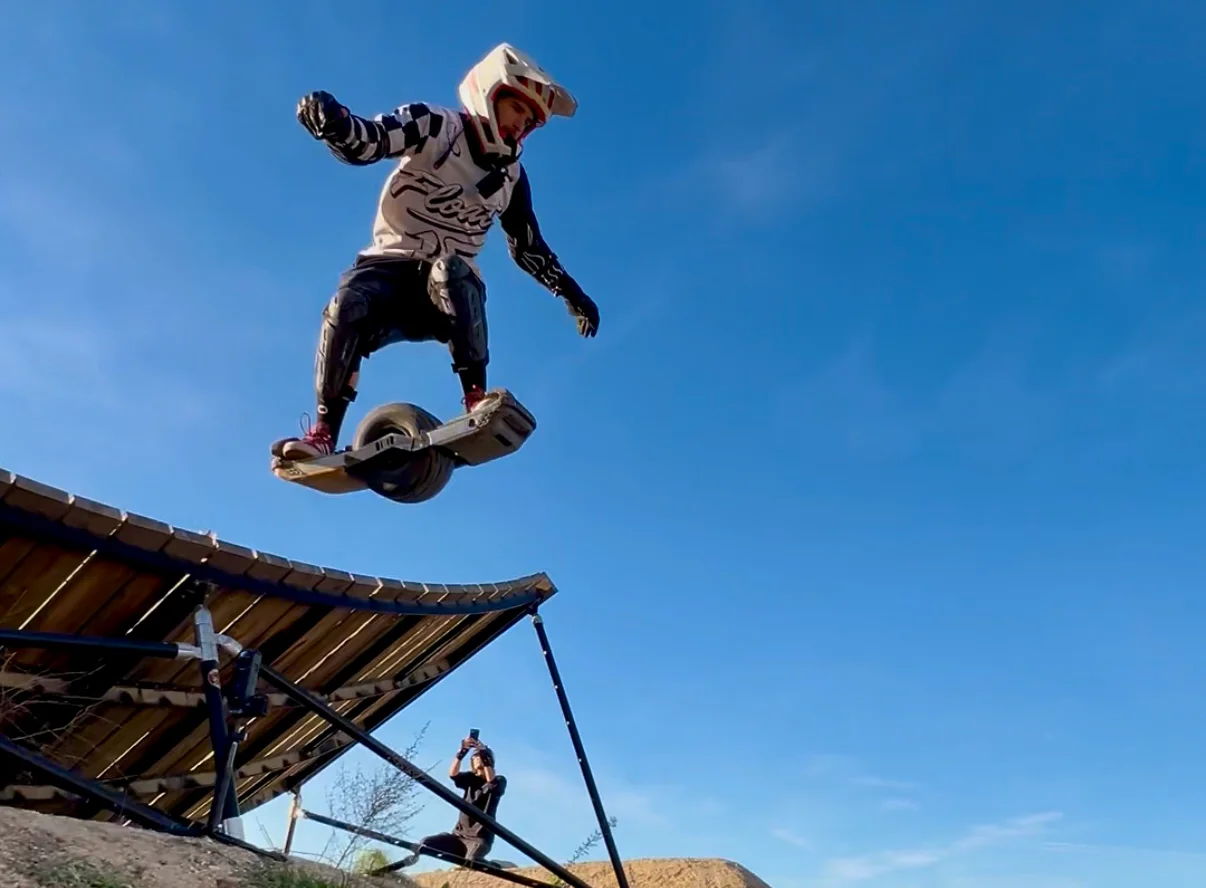
Patecell getting in some jump practice at a bike park
At Let It Ride this year, on a 12 foot gap, he was managing the risk in the other direction. The landing was small, so he tried not to overclear it, and came up about six inches short. He has never broken a bone, which he puts down to luck and to falling well, but that case left him banged up down one side, and being struck from behind during a different race aggravated a pre-existing back issue. It is a straightforward argument for the medical standards USA FLT requires of sanctioned events, and for thinking carefully about where the sport races as builds get faster.
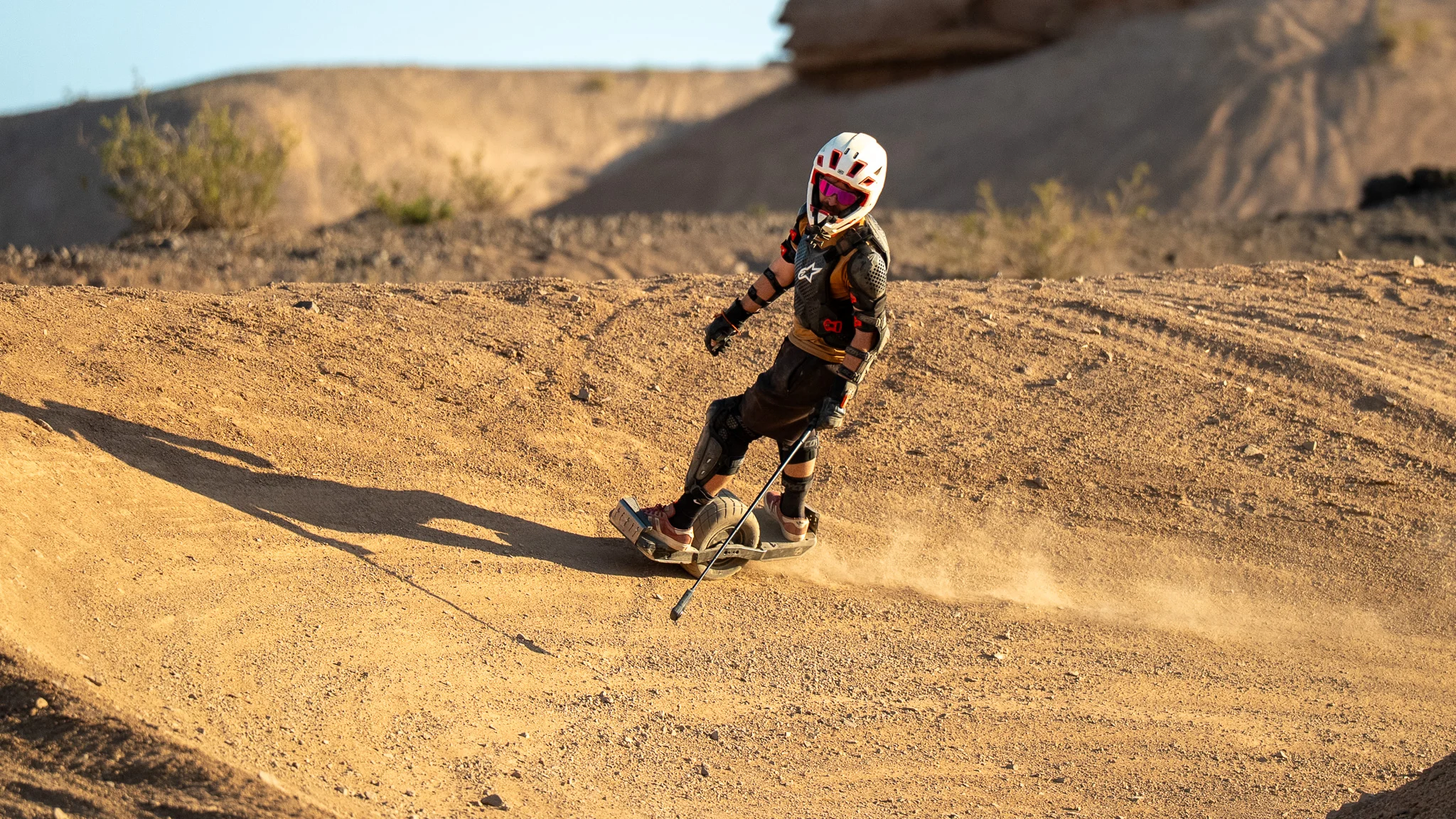
Patecell carving the berm at Let It Ride 5 in Boulder City, NV 2026
Paying His Own Way
Patecell is winning at the top of the sport and funding all of it himself. He delivered pizzas until the operation moved to third party delivery only. The layoff that followed is, awkwardly, what made his breakout season possible: it gave him roughly four months of schedule freedom and he spent it traveling to events across the country, including a trip to Wisconsin he never expected to make.
He now works at his sister's bar and drives delivery, both chosen specifically because they keep race weekends open. His only sponsorship arrived within the last two months, from Fungineers, and it covers parts rather than travel.
His advice to event organizers has nothing to do with money. It is that nobody markets early enough.
A lot of the events start advertising heavily a week before. What is that going to do? Everyone's already made their plans. Nobody really pushes all year.
He is equally clear about what a national circuit does for riders who are carrying their own costs. He described a junior racer who used published national rankings to make the case to his teachers for missing school to travel to a race. Second in the country is a fact a teacher can evaluate. "I ride a Onewheel really fast" is not. The same logic, he expects, will eventually apply to sponsors.
A Scene That Does Not Gatekeep
For all the talk of prize pools and points, the thing Patecell describes most warmly is the community itself. Riders hand over motors, tires, tools and hardware to people they are about to race, without being asked.
The community in Onewheel is really crazy, just how nice and welcoming everyone is. Everyone shares tips, whatever this or that. Nobody's really gatekeeping anything.
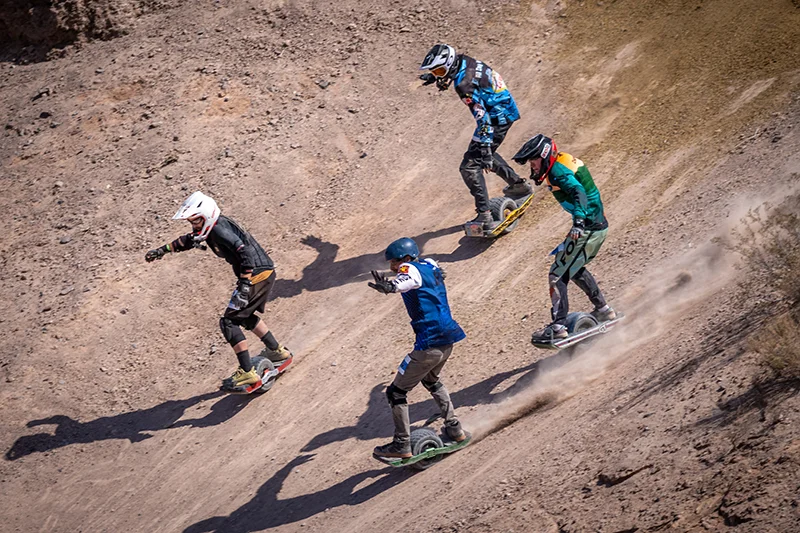
Patecell dropping in on "The Mosta" with a group of riders at Let It Ride 4 in Boulder City, NV 2025
That extends past the start line. With his local Orange County group he rides "Pint Night" every other Friday. He is blunt that he would not know any of them without the board. It is the part of the sport he would defend first.
Which is why the one thing that frustrates him is riders drawing lines between themselves. The VESC versus Future Motion argument, in particular, he thinks is doing real damage, and he pushes back on it from the VESC side.
I'll tell people, just buy an XL if you just want a board to ride. And they're like, no, no, no, you have to buy VESC. I'm like, the XL's great, guys. This isn't going to go anywhere if we don't let the one company succeed.
His point is practical rather than sentimental. VESC gives you customization, right to repair and parts support, and he would not race anything else. But not everyone is a DIY person, and a rider who just wants to turn a board on and ride it is not the enemy. A sport that only welcomes people willing to rebuild their own controller is a sport with a ceiling on it.
Asked who to watch, he pointed at a rider who cannot race his class yet. Cody won expert at Northwest and is not old enough for Pro, and Patecell has already felt him coming: at a Seek n' Shred mass start, Cody sat on his wheel until he finally caught something loose and fell.
The young kids just have the endurance like crazy. They just don't have to slow down.
Northwest Electric Fest 2026 Results: Onewheel Pro Men
July 15-19, 2026 · Veneta, Oregon · Onewheel Pro Men Results
Pos | Rider | Time |
|---|---|---|
1 | 8:47.130 | |
2 | 9:21.200 | |
3 | 9:40.200 |
Patecell took it by 34.07 seconds over Minsker, with Peterson a further 19 seconds back.
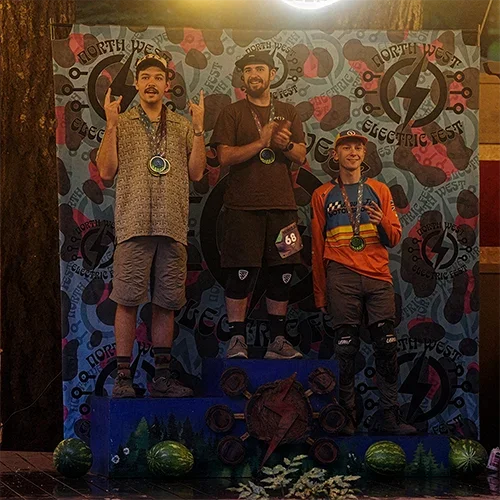
Left to right: Kai Peterson, Cameron Patecell, Jack Minsker. Photo by @eRideLife.
Northwest Electric Fest's Jesse Cargil continues to build one of the most demanding courses in the country, and the riders know it. Patecell rates it the hardest race he attends, which is about the highest compliment a course builder can get. The USA FLT circuit is glad to have it on the calendar.
What Comes Next
Patecell is in talks to buy an F-18 and wants to race both Onewheel and EUC at Amped Electric Games in Bentonville this October. He is realistic about the timeline and says he will not be fast enough on the wheel to contend by then. He wants to do it anyway.
Bentonville is also the venue he is most curious about, because the equipment has finally caught up to the terrain. Onewheels can clear Thunderdome's tabletops and gaps now in a way that was not possible when the field was still riding XRs on free foot.
He is candid that results tracking still has work to do, and he flagged gaps in his own record during our conversation. Part of the problem is which runs get timed. Head to head heats are where riders actually go for it, and Patecell reckons he has run roughly 30 seconds quicker in a head to head than in the corresponding time trial, for the simple reason that time trials have not carried competitive weight.
Complete, consistently timed results are what make a season mean something across events, and it is a problem the USA FLT National Circuit is actively working to solve for 2027. Riders who take three weekends off work to go racing deserve a record that reflects what they actually did.
You can find him on Instagram at @cameronewheel and on YouTube at @CamerOnewheel, where the race footage tends to show up well before the results do.
FAQ
What division did Cameron Patecell win at Northwest Electric Fest?
Cameron Patecell won the Onewheel Pro Men division at Northwest Electric Fest, his second consecutive win at the event.
Where is Cameron Patecell from?
Patecell is 27 and rides out of Southern California, where he is part of the Orange County riding community.
What board does Cameron Patecell race?
He races a custom VESC build with a 134 volt pack, a 400 amp controller, a Fungineers 5 inch Superflux high torque motor and The Float Life 5 inch BTG Pioneer tire. He runs a remote for live angle adjustment and a custom three-piece printed foothold system.
How did Cameron Patecell get into Onewheel racing?
His brother bought a Onewheel Pint in 2022. Patecell crashed hard on his first day riding without gear and stopped for roughly eight months. A trail ride on a Onewheel GT brought him back, and his first competitive event was Amped Electric Games in 2024, where his board failed on arrival and he raced a borrowed setup.
Why does Cameron Patecell call Northwest Electric Fest the hardest race?
The heats are among the longest on the circuit, close to nine minutes, on a course that is dusty, heavily shadowed, rough and steeply downhill. Sustained descending is the specific challenge on a Onewheel, because braking requires leaning back, which risks dragging the tail on loose terrain.
What was Cameron Patecell's winning time at Northwest Electric Fest?
Patecell won the Onewheel Pro Men final in 8:47.130, ahead of Jack Minsker at 9:21.200 and Kai Peterson at 9:40.200.
What sports did Cameron Patecell play before Onewheel?
Soccer was his main sport from childhood through high school. He also played baseball, ran track, and rode scooters, skateboards, bikes and Ripstiks. He snowboarded roughly once a year, though he says the technique does not transfer to Onewheel as directly as people assume.