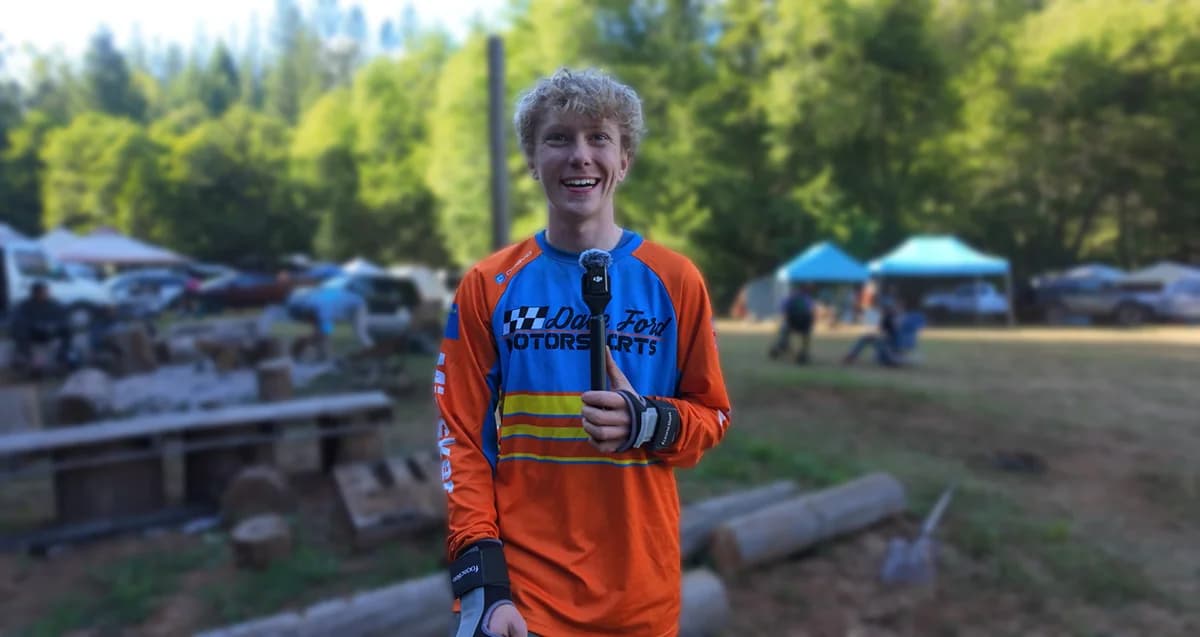
Jay is mid-sentence when he stops. His eyes well up. He takes a breath, laughs at himself, waves it off. "Give me a second. I'll get my eyes washed." The dust, he says. Definitely the dust.
But anyone watching knows better. Jay, a representative for the open-source PEV brand Fungineers, is standing at his tent at Oak City Shred Fest surrounded by people he met on a Discord server, a friend named Kyle who talked him through his first ESC connection over FaceTime, people who flew in from across the world to be here. For someone who spent most of his life feeling like he never quite fit anywhere, this moment hits different.
"I've never had a group of people before," he says, composing himself. "I always feel like I've been alone for so much of my life."
He talks about social media dividing people into echo chambers and bubbles, about never having had a place to fit. That changed here. "For the first time now I feel like I fit into a niche," he says. "There's like a hyper close knit community where everyone has some type of role to play in, no matter what you do."
What is Fungineers?
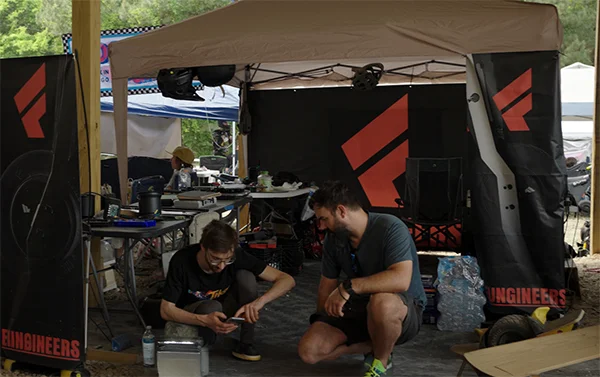
The Fungineers setup at Oak City Shred Fest. Photo: Seth Johnson (@eridelife)
Fungineers is not a conventional company. Based out of Dubai but operating as a genuinely international collective, the brand makes open-source hardware and firmware for the personal electric vehicle space, specifically for riders who want to understand, repair, and upgrade what is underneath their feet rather than hand that control over to a corporation.
"Although we're a company, we are a product of the community," Jay says. "We are trying to embody the community as much as we can because we wouldn't be anywhere without them."
Collaborators contribute from the UK, the EU, Australia, and Africa. The hive mind, as Jay calls it, is the engine.
Where the VESC scene came from, and where Fungineers fits
The origin story is not Fungineers' story. It belongs to the VESC ecosystem, the open-source world that grew up around riders who got tired of being locked out of their own devices. Future Motion dominated the space. A handful of technically gifted people started throwing ideas at the wall.
"It started just from screwing around and trying to figure out what works," Jay says. People came in and added their ideas. Eventually the scene wanted more than a hobby: "we need structure and regulation and growth and maturity," as he puts it.
That scene now supports a whole market of builders, vendors, and companies. Fungineers is one of them, not the author of it, and Jay is insistent on the distinction. "It's open source," he says. "Solely the people who are fueling it with their own passion." He is quick to point out how much of his own work leans on other people: "I go to the community to help me solve half my problems because I'm not smart enough by myself to figure it out."
Jay came into it as a watcher first, then a contributor. "I went to school for music. I graduated with a music degree," he says. He is a pianist and an operatic singer, and he had no experience in any of this. He found it, in his own blunter phrasing, by messing around and finding out.
"Follow your opportunities," he says. "Don't chase your dreams, don't chase some fantastical idea. Chase the things that you have in front of you."
Why open source: freedom versus convenience
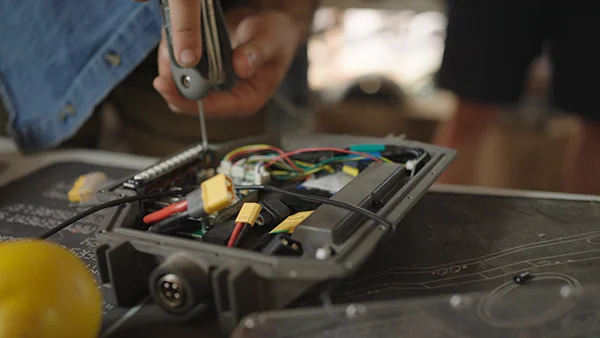
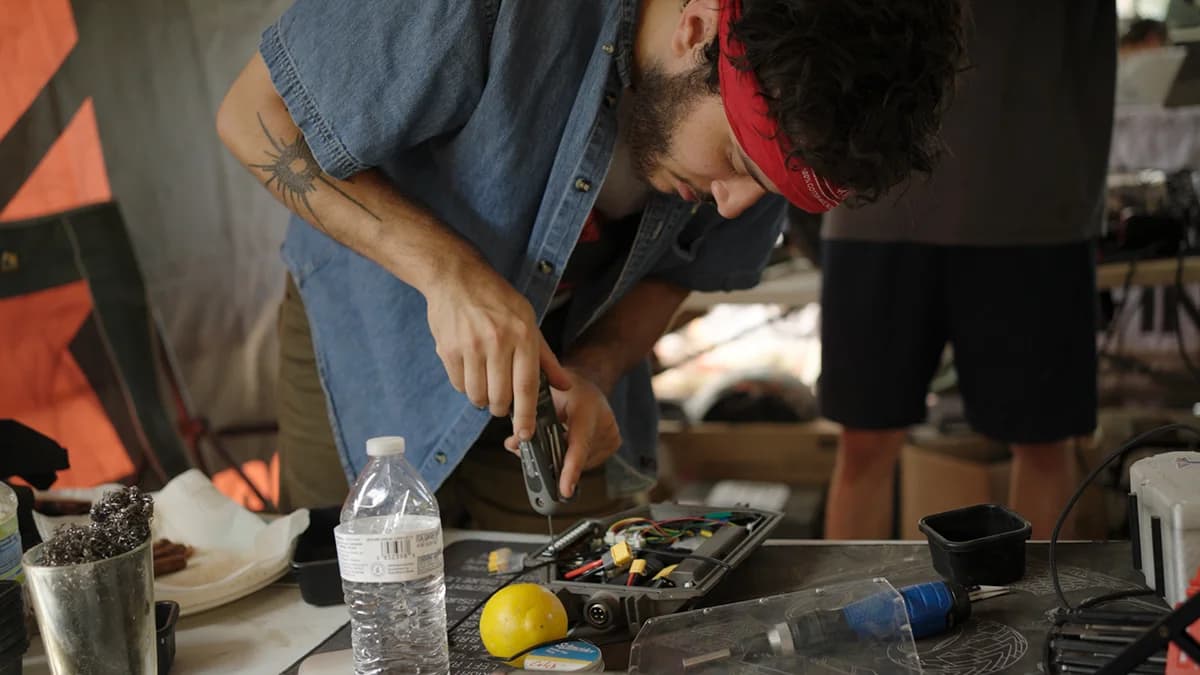
A controller box opened up on the bench. Photo: Seth Johnson (@eridelife)
The ethos is rooted in something deeper than product specs. Jay frames it plainly: convenience versus freedom. Subscription culture, corporate lock-ins, planned obsolescence. Every day, he argues, people trade real ownership for the illusion of it.
"We're really just renting the things that we own," he says. He frames it as a trade: freedom handed over for convenience, which works in the short term and costs you individuality in the long one.
His answer is accessibility. Making it easier and safer for riders to understand their own hardware, to get into the community without being overwhelmed, to take on the responsibility of true ownership and discover how rewarding it is on the other side.
How racing drives Onewheel hardware development
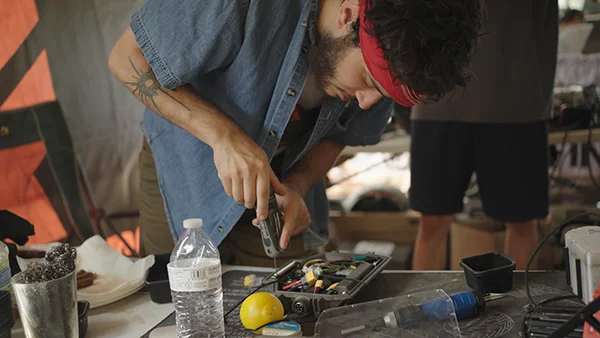
Working on parts at the tent between sessions. Photo: Seth Johnson (@eridelife)
At events like Oak City Shred Fest, the racing itself feeds the engineering. When riders push hard, boards break. When boards break, builders learn. When builders learn, the technology advances.
"It teaches us how our parts break so we know how to make them better," Jay says. "Everyone wants to go faster, everyone wants to go bigger, and the only way we do it is by iteration of figuring out what works and what doesn't work."
The numbers keep moving. Battery voltages in the scene have climbed hard in just a few years, and Jay promises it is nowhere close to stopping.
Who races Fungineers hardware

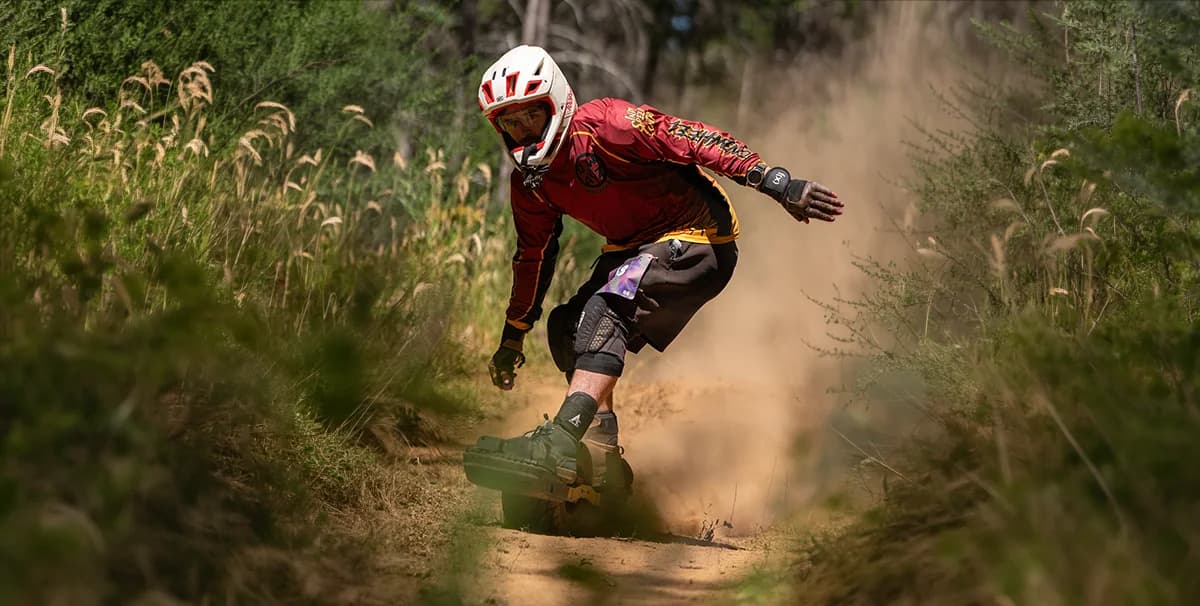
Cameron Patecell on trail. Photo: Seth Johnson (@eridelife)
Cameron Patecell, who leads the USA FLT Mens Pro off-road standings, races a 134-volt build on a Thor 400 controller and a Fungineers five-inch Superflux motor. The brand picked him up in mid-2026, after years of paying his own way.
"I've basically had no sponsors until like I think a month and a half or two months ago," he told USA FLT. "Fungineers was like, 'Yeah, we'll officially sponsor you.' So they're sending me parts for free."
He is clear that it does not cover travel, which still comes out of his own pocket. What he credits them for is the repair posture: "They'll send you the parts. They're awesome about that."
The Discord community behind the tent
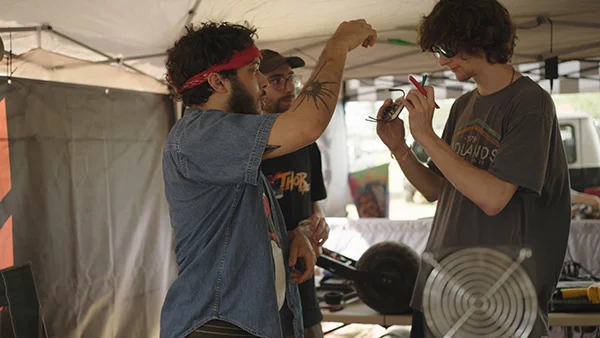
Jay handing off a part to DuckBillWill in the Fungineers tent. Photo: Seth Johnson (@eridelife)
Jay's tent at Oak City was staffed almost entirely by people from the build-and-repair Discord he lives in, an online space where riders diagnose boards, solve problems, and build genuine friendships. Those digital relationships became real ones the moment they showed up in person.
"I know 15, 20 people here straight from the Discord servers," Jay says. People he had only ever typed at were standing in his tent. "It makes it tangible. It makes it real."
That realness is the whole point, and Jay does not hedge about what it has meant to him.
"It's the first time I've ever felt a true sense of community, not some facade type thing but like genuine connection with people, and I am beyond blessed to be here."
Follow Jay on Instagram at @the.funjay and check out his YouTube channel, Jay Is Doing Stuff, for accessible breakdowns of VESC-space concepts. To dig into Fungineers products and join the community building the future of PEV hardware, head to fungineers.us and find them across social platforms. The rabbit hole, Jay promises, goes pretty far. He will gladly show you the way. If you'd like to join the VESC conversation head over to the VESCIFY Discord or FunWheel Discord.
Latest News
Clydesdales (215 lbs+) | Hamilton, New Jersey | Founder of a statewide New Jersey race league The Flight Fins founder on going solo, building what he rides, and why connection matters more than winning. Ten riders, three coached days at the Bentonville venue September 28 to 30, immediately before Amped race weekend.